Community Relationship Management
People first. Relationship-driven. Synchronized Communities.
Right now, communities are being tested from every direction—rising costs, shrinking support systems, stressed schools, and uncertainty about the future of work. As the challenges rise, the distance between children, families, residents, and the systems meant to support them can start to grow. But, communities aren’t broken … they’re disconnected.
Community Relationship Management (CRM) helps communities strengthen the relationships that hold everything together—between residents, law enforcement, social services, schools, and local government. We focus on the process, systems, and mindset that make trust real, measurable, and sustainable.
Drawing on lived experience across Europe, Asia, and the United States, we apply quality management, customer-focused engagement, and practical relationship-building tools to help counties and cities align, coordinate support, and grow into true Communities of Excellence.

It takes a village community.
People First
Identify and understand people
Community excellence isn’t a top-down mandate—it’s a ground-up movement powered by people who feel seen, heard, and connected. That’s the core belief behind Community Relationship Management: engaged people deliver community excellence. Not programs alone. Not policies alone. People.
Know the community
To build trust, you have to know who you’re serving—and who the community already trusts.
Know residents: children, families, seniors, and working adults—what they need, what they fear, and what they value
Validate community organizations and nonprofits: who’s already doing the work, where support is strong, and where gaps exist
Identify formal leaders: elected officials, agency leaders, school leaders, and public safety leadership
Recognize informal leaders: coaches, barbers, faith leaders, neighborhood advocates, mentors, and the everyday people others listen to
Make people visible (so relationships can grow)
Define the resident journey and meet people where they are—from Unknown Resident to Known Resident, Satisfied Resident, and Community Advocate
Use community touchpoints to learn context, reduce blind spots, and personalize support
Listen continuously and act on the Voice of the Community
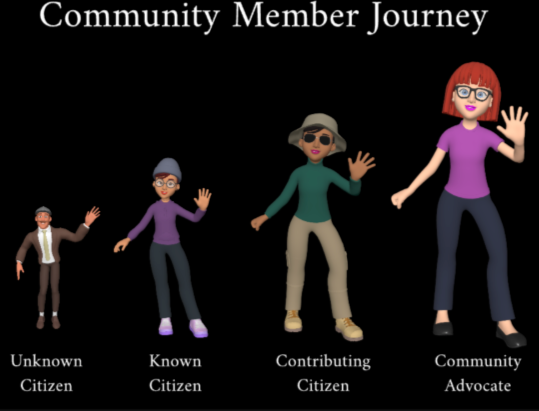
If you cannot see someone, you cannot understand them. If you cannot understand them, you cannot build a relationship.
Relationships Driven
Establish and nurture relationships
Once you know the people residents, nonprofits, community organizations, and formal and informal leaders, your next responsibility is to build and protect the relationships between them. Community excellence does not happen by accident. It happens when communication is strong, expectations are clear, and trust is nurtured across every connection in the community.
Vertical and horizontal communication is the difference between good intentions and real coordination.
Vertical communication keeps alignment strong from leadership to frontline teamsso priorities, decisions, and accountability dont get lost.
Horizontal communication keeps partners connected across agencies and organizationsso families dont fall into gaps and residents dont have to repeat their story at every door.
In a healthy community system, multiple relationship lanes must be nurtured
Internal relationships (within an organization): leadership teams frontline staff volunteers
Partner relationships (between community partners): schools law enforcement social services nonprofits local government faith-based organizations
Resident-to-resident relationships: neighbors, families, mentors, peer networks, community advocates
Resident-to-partner relationships: residents agencies, residents schools, residents service providers, residents public safety
Every relationship is valuable. And any relationship, if ignored, can become a blocker to Community Excellence. When relationships aren’t nurtured, trust erodes, communication breaks down, and the community experiences fragmented support instead of coordinated care.
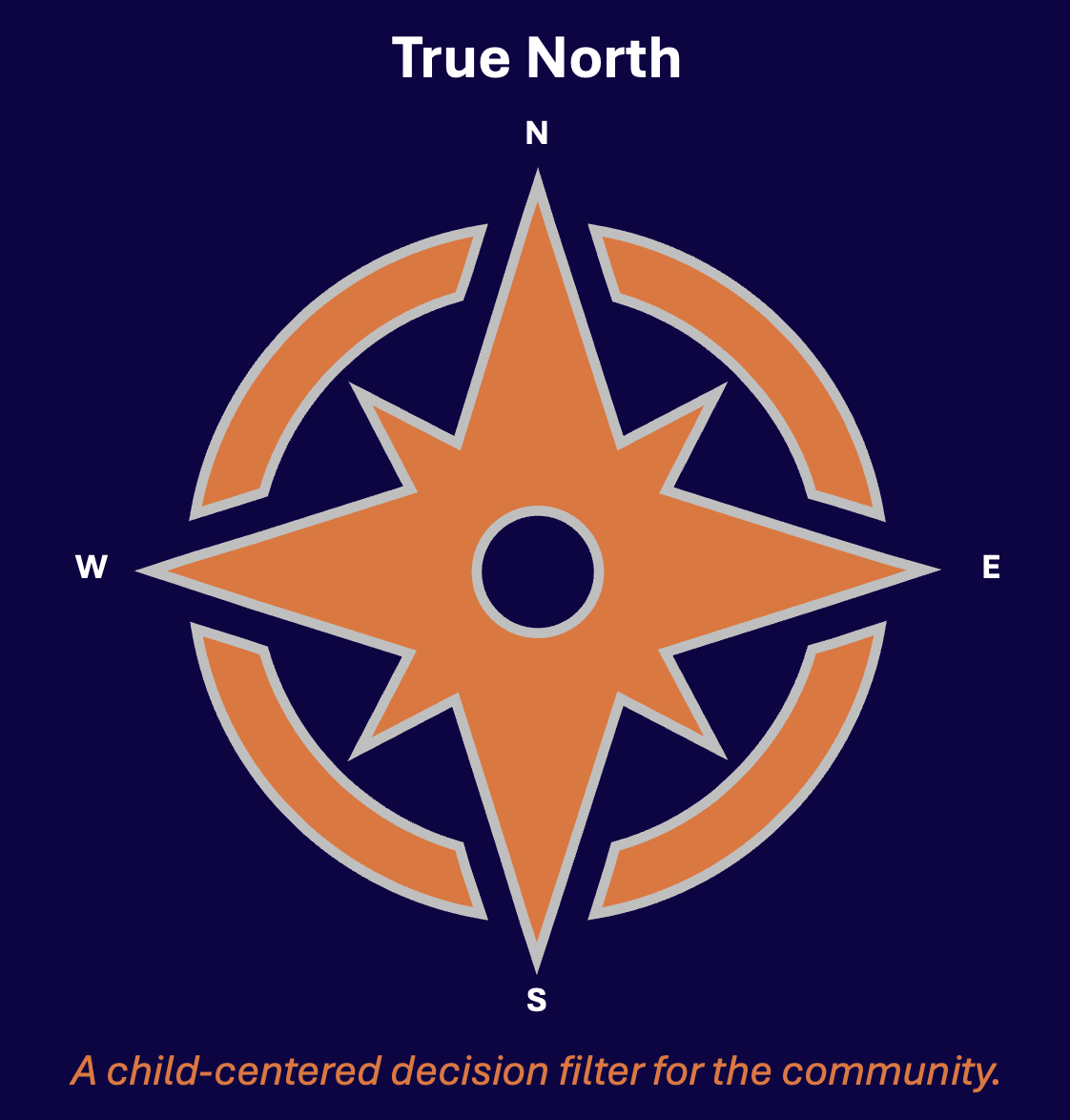
True North
Synchronization and Alignment
The Value of Synchronized Community Relationships
When communities, law enforcement, schools, nonprofits, and families work in sync, everyone thrives. Community Relationship Management strengthens the relationships that already exist so trust can grow, support can be coordinated, and progress can be measured.
Build Trust: Every interaction is a chance to build credibility, safety, and respect.
Promote Unity: Strengthen relationships around shared goals and community wellbeing—not division.
Sustain Impact: Close the loop so residents know what’s happening, what’s next, and who owns the next step.
Bridge the Gaps: Families shouldn’t have to repeat their story at every door—partners align around shared context.
Alignment to True North: The Child
Synchronization answers “how we work together.” True North answers “what we protect together.” When decisions get complicated, priorities compete, or systems feel stretched, we stay aligned to one shared priority: the future of the community depends on children.
A shared priority across partners: align on outcomes that protect children.
A decision filter: if it doesn’t improve safety, stability, dignity, or long-term wellbeing, it’s not the right move.
A commitment to preventio: act early, share context responsibly, reduce preventable crises.
A standard for accountability: clear ownership, follow-through, measurable results—so families aren’t left in the gaps.
Community-led partnership: partner with trusted community leaders to guide priorities and keep solutions grounded in real needs.
Frequently Asked Questions
-
It’s a distinguishing strength: Our Intelligence Community experience brings disciplined planning, clear communication, structured coordination, and outcome-focused measurement. In plain terms, we’re trained to connect the dots, reduce blind spots, and help multiple groups work toward the same mission with consistency and accountability.
-
It means aligning the key moments when people interact with community systems—school support, mentorship, family services, community programs, and positive engagement with local partners—so those interactions are connected and consistent, not fragmented or working in silos.
-
Because children are the future we can still shape. When youth have consistent support, trusted adults, and aligned community partners, they’re more likely to thrive in school, make healthy choices, and become leaders who keep the community moving forward.
-
You can join our initiatives as a volunteer, partner with us, or support our programs through donations. Contact us for more details!
-
Because good intentions aren’t enough—families deserve follow-through. KPIs help partners stay aligned, see what’s working, fix what isn’t, and prove progress with transparency and accountability.
-
We use measurement to improve outcomes, not to label kids. We prioritize privacy, minimize sensitive data collection, and focus on aggregated trends and program-level progress whenever possible. Any partner-specific data sharing should follow the policies and legal requirements of the agencies involved..
Bend, Oregon is the latest reminder that school shootings rarely come out of nowhere. In the days ahead, people will argue about parents, gun laws, and school security—but the conversation that’s often missing is the one about community touch points: family court, social services, schools, mental health supports, and everyday adults who see early signals long before violence reaches a classroom.
The warning signs in many cases aren’t absent—they’re distributed across systems that don’t connect. Communities can change that by adopting a “Known Child” standard, strengthening handoffs between home and school, and using Community Relationship Management to track touch points, coordinate follow-up, and make sure no child becomes invisible.